Electric Tankless Water Heaters: Sizing, Costs, Limits
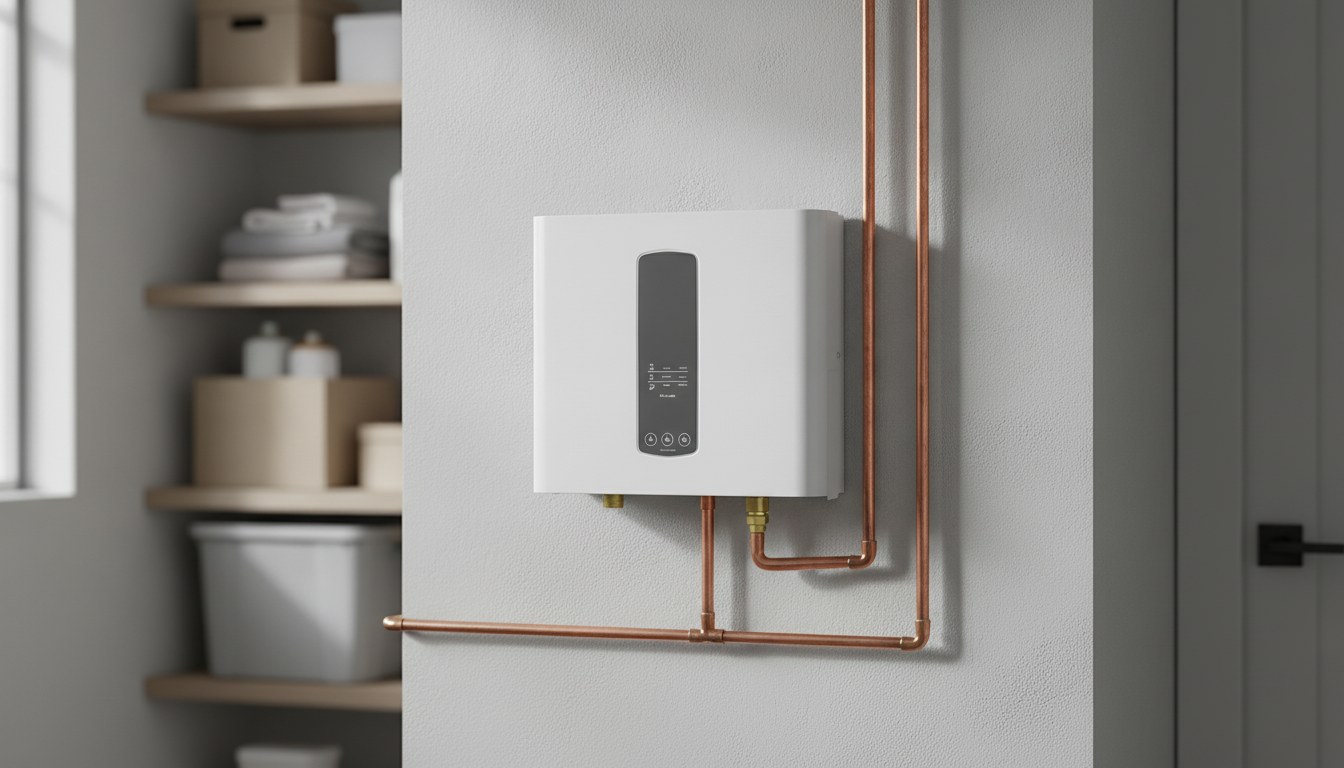
Electric Tankless Water Heater: What to Expect, How It Works, and When It Makes Sense
An electric tankless water heater warms water only when a tap is opened, avoiding the standby heat losses of a storage tank. The results you get depend on incoming water temperature, electrical capacity, and the flow rate needed for showers, sinks, and appliances. This guide breaks down performance, sizing, installation basics, operating cost factors, and practical maintenance so the system fits the home and daily routines.
How electric tankless water heaters work
Electric tankless units heat water “on demand.” When a hot-water faucet opens, cold water begins flowing through the heater, internal sensors detect the flow, and heating elements energize to raise the water temperature as it passes through.
Instead of keeping a large tank hot all day, a controller modulates power to hold a target outlet temperature. That modulation is what makes tankless units feel steady—until demand outruns what the unit can heat at once.
Capacity comes down to two variables: flow rate (gallons per minute) and temperature rise (how many degrees the heater must add). If the flow increases or incoming water gets colder, the unit may reduce output temperature or limit flow to protect the heating elements.
Some models are designed as point-of-use heaters for a single sink or shower. Others are intended for multiple fixtures, but even “whole-home” electric tankless heaters have a defined maximum GPM at a specific temperature rise.
Benefits and trade-offs to know before switching
Benefits
Electric tankless heaters are compact, don’t store gallons of water that can leak, and can provide consistent hot water for longer draws within their rated flow limits. Because they avoid standby losses, they may reduce energy use compared to a tank that reheats water throughout the day. For a general overview of tankless technology and efficiency considerations, see the U.S. Department of Energy guidance on tankless water heaters.
Trade-offs
The biggest constraint is electrical demand. Higher-capacity units often require multiple dedicated circuits and substantial amperage. Performance can also dip in colder months because the heater must work harder to raise inlet water to the set temperature. If two showers and a laundry cycle run at once, you may exceed the unit’s practical capacity.
Comfort expectation: “endless” has limits
Tankless means “endless time,” not unlimited gallons per minute. If your home’s peak demand is high, comfort comes from correct sizing (or using multiple units), not from the tankless label alone.
Sizing basics: temperature rise and flow rate
Start with temperature rise: desired hot-water temperature minus incoming cold-water temperature. Many households target around 120°F for comfort and safety; scald prevention guidance is available from the U.S. Consumer Product Safety Commission. Incoming temperatures vary by region and season, so winter sizing is often the safest assumption.
Next, estimate how many fixtures can run at the same time. Add up realistic simultaneous flow rates (for example, one shower plus a bathroom sink). If the total is higher than the heater’s rated GPM at your required temperature rise, you’ll see cooler water or reduced flow during peak use.
Common fixture flow rates and sizing notes
| Use | Typical flow range (GPM) | Sizing note |
|---|---|---|
| Bathroom sink | 0.5–1.5 | Good for point-of-use units; minimal impact on whole-home demand |
| Kitchen faucet | 1.0–2.2 | Hot-water needs vary; dishwashing can create longer draws |
| Shower | 1.5–2.5 | Most common driver of capacity; two showers at once can exceed mid-size units |
| Dishwasher | 1.0–2.0 (intermittent) | May heat internally but still draws hot water during cycles |
| Clothes washer | 1.5–3.0 (intermittent) | Warm/warm cycles can stack with showers during peak hours |
Larger homes often solve demand by choosing a higher-capacity unit, installing multiple units for different zones, or using a point-of-use heater where wait time is the main complaint. In many upgrades, the electrical service size becomes the real limiter, so confirm your panel capacity before selecting a high-kW model. For energy efficiency perspectives and product categories, ENERGY STAR’s water heater resources are a helpful reference.
Electrical and installation considerations
Operating costs and what influences them most
Maintenance and longevity
A practical option to consider
If space savings and on-demand hot water match your goals, the Electric Tankless Water Heater is a compact option designed for households that want targeted hot-water delivery without a bulky storage tank. Before ordering, confirm electrical requirements and match the intended fixture count to your home’s service capacity and peak-demand pattern.
Helpful additions for a cleaner, more organized bathroom
A streamlined hot-water setup pairs well with a simplified countertop routine—especially in smaller bathrooms where clutter builds quickly. If you’re refreshing the space, a coordinated set like the Creative 6-Piece Bathroom Accessories Set can help keep daily essentials organized while maintaining a consistent look across the vanity.
FAQ
Why does a tankless unit run lukewarm when two showers run at the same time?
Two showers can push total flow above the heater’s maximum GPM at your required temperature rise, so the unit can’t add enough heat to keep the set temperature. Stagger showers, reduce showerhead flow, lower the setpoint slightly, or consider adding a second unit or zoning to cover peak demand.
Do electric tankless water heaters need regular descaling?
Yes—mineral scale can reduce heating performance, cause temperature fluctuations, and trigger error codes. The right schedule depends on water hardness, but flushing 1–2 times per year is common, and isolation valves make the process faster and cleaner.
Can an electric tankless water heater replace a gas tank water heater without upgrades?
Not always, because electric tankless units can require substantial amperage and multiple dedicated circuits. An electrician should confirm panel capacity and perform a load calculation before swapping, even if the plumbing footprint seems straightforward.













Leave a comment