Teen Room Rescue Checklist: 20-Minute Clean Without Drama
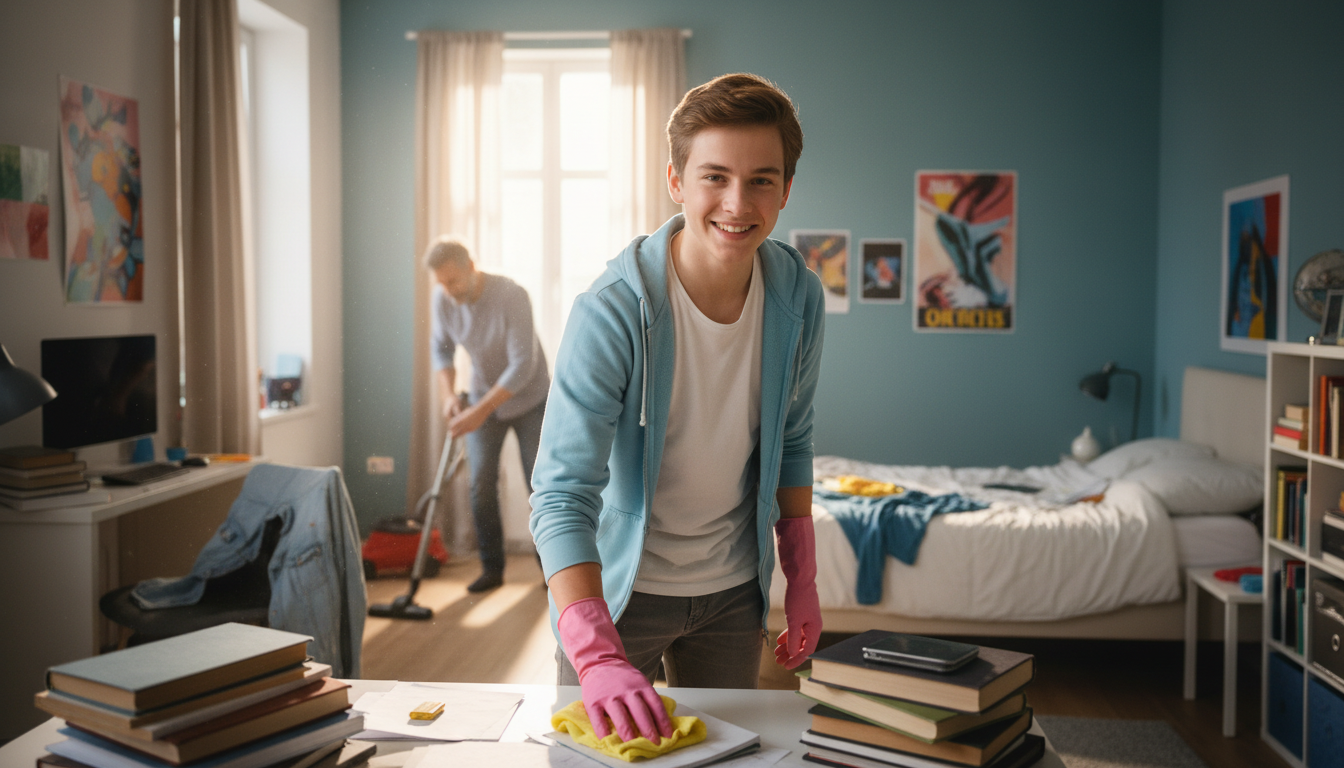
The Ultimate Teen Room Rescue Checklist: Easy Steps to Motivate Your Teen to Clean Without the Drama
A messy teen room is usually less about laziness and more about overwhelm, unclear expectations, and zero payoff. A “room-rescue” approach keeps the conversation calm, breaks cleaning into doable micro-steps, and uses a printable checklist that makes “what to do next” obvious—so the room gets cleaned without turning it into a power struggle. The goal isn’t a showroom; it’s a safe, usable space your teen can maintain.
Start With a Reset: Agree on the Goal (Not Perfection)
Before anyone touches a sock, agree on what “clean enough” means. Teens are far more likely to start when the finish line is clear and realistic.
- Define a “clean-enough” standard: clear floor path, dirty clothes contained, trash removed, bed made, and surfaces usable.
- Pick a fair deadline and time limits: “today by dinner” or “sometime Saturday” works better than “right now.” Use 10–20 minute bursts.
- Offer two acceptable options: “Music or timer?” “Start with trash or laundry?” Choice reduces resistance without losing structure.
- No surprise inspections: set a predictable check-in time and keep feedback brief and specific (one or two observations max).
Set the Room Up for Success (Five Containers Method)
This is the fastest way to cut through the chaos: everything goes into one of five categories first. Organizing can happen later—after the floor reappears.
- Five landing zones: Trash bag, Laundry hamper, Dishes bin, “Put Away” basket, and Donate/Out box.
- Reduce decision fatigue: no sorting beyond the five categories until the first pass is done.
- Stage supplies at the door: trash bags, wipes, all-purpose spray, microfiber cloth, a small vacuum, and a timer.
- Make it frictionless: if the room doesn’t have a hamper or trash can, add them before expecting consistency.
| Minutes | What to do | Done when |
|---|---|---|
| 0–3 | Collect all trash | Trash bag is tied and at the door |
| 3–7 | Gather laundry (clean + dirty) | Clothes are in hamper or sorted pile |
| 7–10 | Return dishes/cups | Food items and dishes are out of the room |
| 10–15 | Clear surfaces into “Put Away” basket | Desk/dresser is mostly clear |
| 15–20 | Quick reset: make bed + quick floor pick-up | Floor has a clear walkway and bed is made |
Use the Checklist to Prevent “What Do I Even Do?” Moments
“Clean your room” is vague and emotionally loaded. A checklist turns it into a neutral sequence of small wins.
- Make progress visible: “Pick up 10 items” is a clear target; “clean your room” is a fog.
- Use checkboxes for momentum: crossing off tasks reduces overwhelm and cuts down on back-and-forth.
- Keep categories simple: Trash, Laundry, Floor, Surfaces, Bed, Final pass.
- Put it where it’s seen: taped inside the closet door or on a clipboard near the desk.
If you want a ready-to-print version that’s designed specifically for teens, use the Printable Teen Room Rescue Checklist to make the routine consistent and “parent-proof.”
Motivation That Works: Choices, Timing, and Natural Rewards
Motivation improves when cleaning connects to something immediate, predictable, and fair—without turning into a negotiation marathon.
- Link to immediate freedoms: screen time, rides, friends over, a gaming session, or later bedtime—agreed ahead of time.
- Let your teen choose the cleaning window: “Anytime between 2–6pm” preserves autonomy while keeping boundaries.
- Use body-doubling: do a quiet task nearby (folding laundry, paying bills) while they clean; it lowers the activation energy.
- Keep rewards proportional: consistent small privileges beat huge incentives that create future bargaining.
- Skip lectures mid-clean: do a quick pre-brief, then a short debrief after the timer ends.
For healthy habit-building ideas that align with child development, visit HealthyChildren.org (American Academy of Pediatrics).
Scripted Phrases That Lower the Temperature
When emotions spike, language matters more than logic. Use short, neutral phrases that point back to the next micro-step.
Keep It Clean With a 5-Minute Daily Reset
For practical guidance on safe cleaning and disinfecting basics, reference the CDC recommendations (especially helpful if cups, food wrappers, or used tissues collect in the room).
Printable Teen Room Rescue Checklist (Quick Use Guide)
To keep everything simple, pair your routine with the The Ultimate Teen Room Rescue Checklist and treat it like a reusable system: reset, maintain, repeat.
More Helpful Picks (In Stock)
- The Ultimate Teen Room Rescue Checklist: Easy Steps to Motivate Your Teen to Clean Without the Drama | Printable Teen Cleaning Guide | How to Motivate a Teenager to Clean Their Room (Digital printable)
- Smart Money Moves: Real Ways People Save (A practical read for teens building independence—pair it with responsibility routines)
FAQ
What if a teenager refuses to clean their room?
Stay calm and set a clear minimum standard tied to safety and health (like a clear walkway, trash removed, and dishes out). Offer limited choices, use short timed sprints, and connect completion to predictable privileges, then revisit barriers like overwhelm, too much stuff, or missing basics (no hamper/trash can) using the five containers method.
How long should it take a teen to clean a messy room?
A quick rescue reset can take about 20 minutes, while a deeper clean often takes 60–120 minutes depending on clutter, laundry, and how much needs to be put away. Splitting the work into timed bursts with short breaks helps prevent stalling and burnout.
How can a parent motivate a teen without nagging?
Focus on autonomy plus structure: agree on a “clean-enough” definition, use a checklist, and rely on timers and predictable check-ins instead of repeated reminders. Body-doubling and consistent natural rewards (like screens or friends) also help without turning it into a daily argument.
















Leave a comment