Speak Confidently: Point–Proof–Prompt for Any Talk
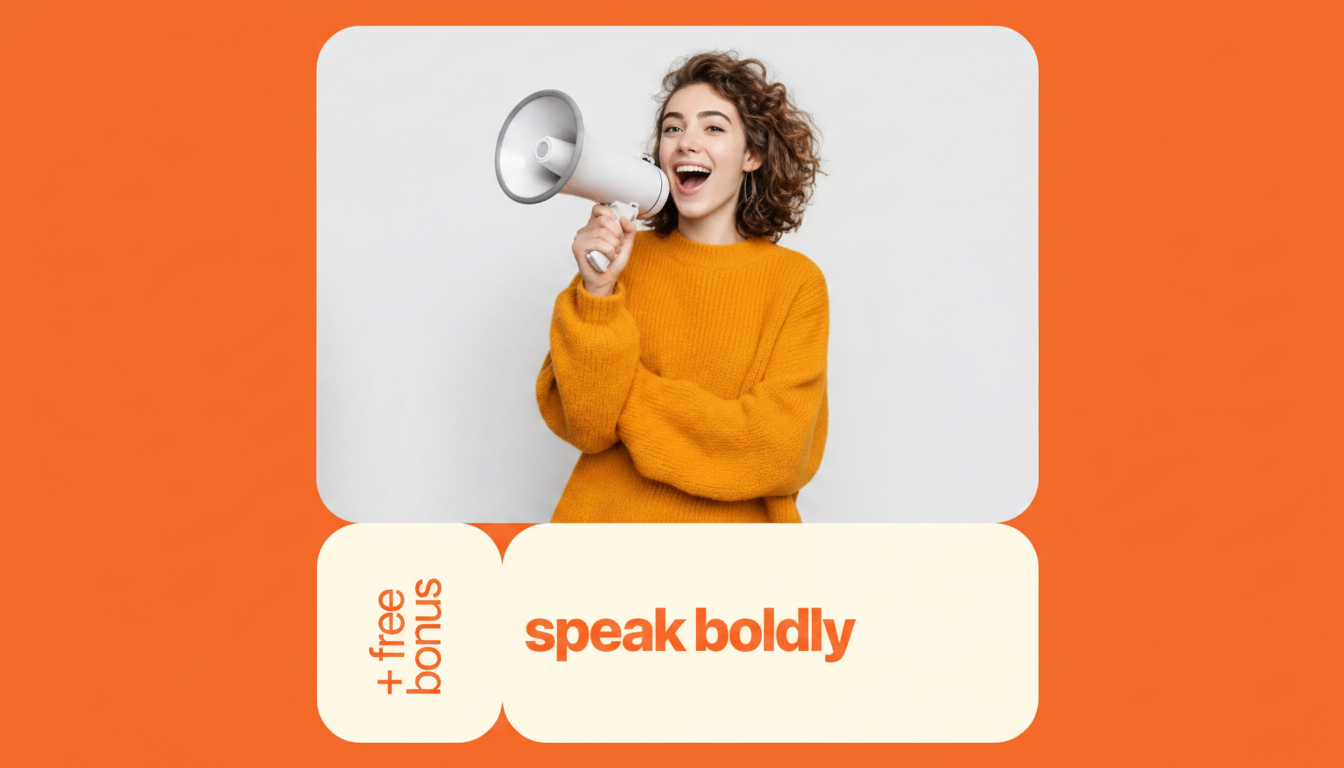
Speak Boldly: A Simple Guide to Confident Communication
Confident communication is a learnable skill, not a personality trait. With a few practical tools—clear structure, steady delivery, and simple ways to manage nerves—anyone can speak up in meetings, present ideas clearly, and feel more at ease when the spotlight turns their way. This guide focuses on everyday strategies that work for quick updates, interviews, group discussions, and formal presentations.
What “speaking confidently” actually looks like
Confidence isn’t about sounding fancy or never feeling nervous. In practice, it looks like a few repeatable behaviors people can feel and follow.
- Clarity over complexity: Use short sentences, one idea at a time, and a clear point. If a sentence needs two breaths, it usually needs a rewrite.
- Presence: Keep a steady pace, use intentional pauses, and choose grounded posture (feet planted, shoulders relaxed).
- Connection: Speak to one person at a time and use audience-focused language (“what this means for the team…”).
- Credibility: Support your message with simple evidence, specific examples, and a clear call to action.
A helpful way to check yourself: if someone asks, “So what?” your next sentence should answer it immediately.
A simple framework for any talk: Point → Proof → Prompt
When people ramble, it’s rarely because they “don’t speak well.” It’s often because they’re missing a structure they can rely on under pressure. The Point → Proof → Prompt framework keeps your message tight and actionable.
- Point: State the main message in one sentence (what matters and why).
- Proof: Add one supporting detail—data, story, or example—without overexplaining.
- Prompt: End with a next step (decision needed, question to answer, action to take).
- Where it fits: Use it for introductions, status updates, Q&A answers, and slide presentations.
Where to use the Point → Proof → Prompt framework
| Situation | Point | Proof | Prompt |
|---|---|---|---|
| Team meeting update | What changed since last update | One result or obstacle | What help/decision is needed |
| Interview answer | Main strength or lesson | One concrete example | How it helps in the role |
| Presentation section | Key takeaway of the slide | One metric or short story | Transition or question to the room |
| Difficult conversation | What needs to be addressed | Specific behavior/impact | Clear request and timeline |
Managing nerves without trying to “eliminate” them
Nervousness isn’t a sign you’re failing—it’s a normal stress response. The goal is steadiness, not perfection. The American Psychological Association notes that stress can affect both body and mind; a simple reset helps you regain control quickly.
- Reframe adrenaline as energy: Tell yourself, “This is fuel.” Aim for steady delivery, not zero nerves.
- Pre-speaking reset: Slow exhale, relax jaw/shoulders, plant feet. A longer exhale often reduces shakiness.
- Prepare the first 20 seconds verbatim: A practiced opening reduces the “start” spike and prevents rushed speech.
- Use micro-pauses: Stop after key sentences to regain control and sound confident.
- If your voice shakes: Lower volume slightly, slow down, and pause—audiences usually perceive composure, not panic.
If you want extra low-stakes practice in a supportive setting, resources like Toastmasters International can help build repetition and comfort over time.
Voice, pace, and body language that instantly improve delivery
Small delivery choices create a big “confidence” impression—especially in the first minute. Prioritize control over intensity.
- Pace: Target slightly slower than normal conversation, especially at the beginning when most people speed up.
- Pauses: Replace filler words with silence after important points; the pause signals authority and gives people time to absorb.
- Volume: Project to the back of the room—or to the far edge of your camera mic range in virtual meetings.
- Eye contact: Rotate between individuals; for virtual, look at the camera during key lines (your Point and your Prompt).
- Gestures: Keep hands visible; use small, deliberate motions to mark transitions instead of constant movement.
For professional presentation expectations in workplaces, practical guidance from Harvard Business Review’s presentations topic can be a useful reference point.
Finding words fast: how to speak clearly on the spot
Speaking clearly without a script is a skill you can train. The trick is to buy yourself structure, not time.
Practice that fits real life: a 10-minute confidence routine
A practical guide for building lasting confidence
If you want a clear, repeatable approach you can use immediately, Speak Boldly: A Simple Guide to Confident Communication – Build Your Confidence in Speaking & Master Public Speaking Skills focuses on usable techniques for real situations—meetings, presentations, and everyday conversations. It’s a digital guide priced at $7.99 and currently in stock.
More in-stock digital guides you may also like
- 3 Smart & Simple Ways Millennials Can Start Investing Today | MRR Guide | Financial Freedom eBook | Passive Income for Beginners | 3 Ways Millennials Can Invest PDF (in stock)
- Understanding Why Kids Hit and How to Guide Them – A Gentle Parenting Guide Exploring kids hitting others reasons (in stock)
FAQ
How can confidence in speaking improve quickly?
Stack small wins: memorize the first 20 seconds, slow your pace, and use intentional pauses. Use Point → Proof → Prompt for most answers, and do a short daily practice (ideally with a quick recording) to lock in progress.
What should be done when anxiety hits right before speaking?
Do a brief reset: slow exhale, relax jaw and shoulders, and ground your feet. Simplify your opening line and start with a practiced first sentence—nervousness can be channeled into steady energy once you begin.
How can public speaking skills improve without joining a class?
Use self-led drills: timed 20–40 second answers, 3-part lists, and recordings with one improvement goal at a time. Get low-stakes repetitions through small meeting updates, brief toasts, or quick virtual check-ins.
















Leave a comment