Wall-Mounted Tankless Electric Water Heater w/ LCD + Remote
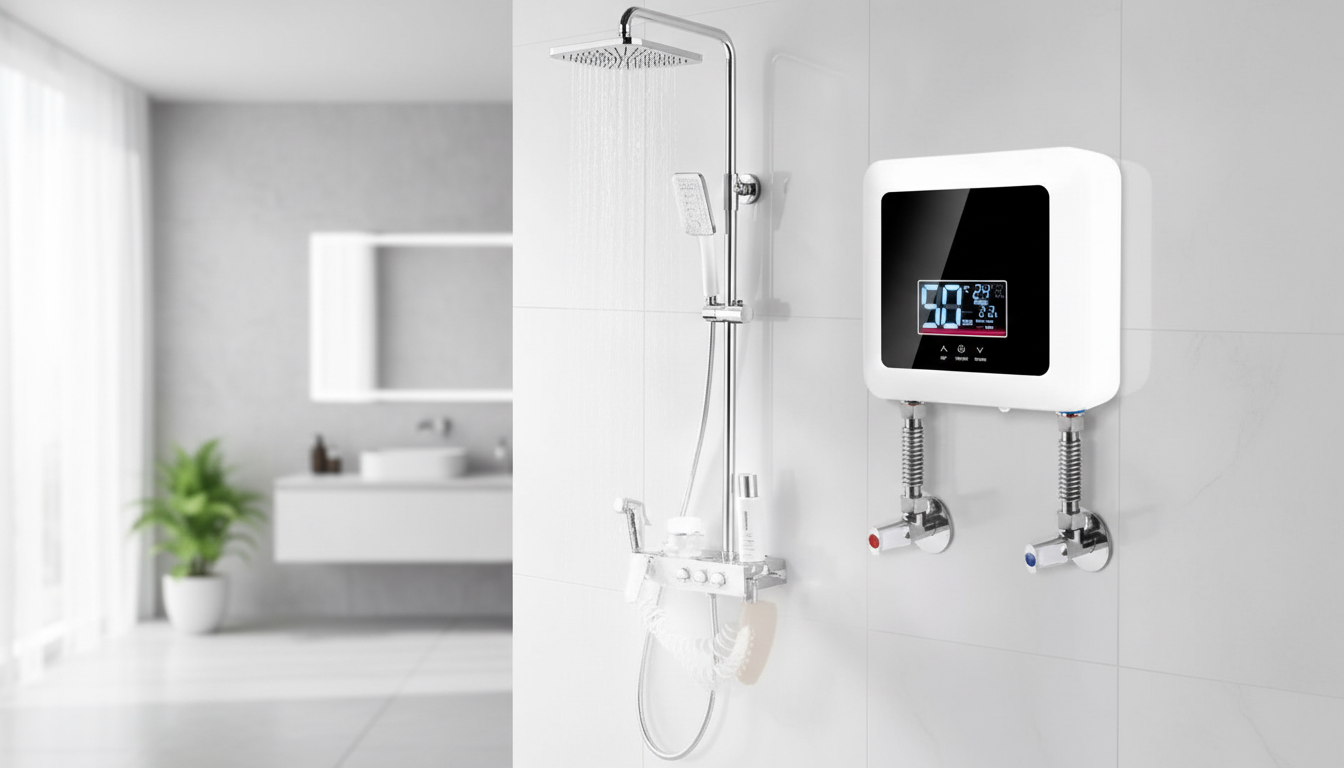
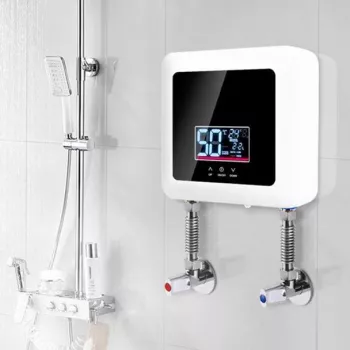
Wall-Mounted Instant Electric Water Heater with LCD Display & Remote Control
A wall-mounted instant electric water heater delivers hot water on demand without a bulky storage tank. With an LCD display and remote control, temperature adjustments are quick and precise—ideal for point-of-use setups in apartments, studios, and compact bathrooms. When space is tight and comfort matters, an instant unit can simplify your routine by heating water only when you need it.
What an instant wall-mounted electric water heater does
An instant (tankless) electric water heater warms water as it passes through the unit instead of storing gallons of pre-heated water in a tank. That design comes with a few practical advantages for small homes and single-fixture use.
- Heats water as it flows through the unit rather than storing heated water in a tank
- Helps save space with a compact wall-mounted design
- Provides fast temperature control for sinks, showers, or utility use (depending on local flow rate and inlet temperature)
Because tankless systems respond to demand, your real-world results depend on how cold the incoming water is and how much water you try to run at once.
LCD display and remote control: practical benefits
Controls are more than a convenience—on a point-of-use heater, they’re how you dial in comfort while minimizing the guesswork of faucet mixing.
- LCD display makes temperature setting and status checks easy at a glance
- Remote control allows adjustments without reaching the unit—useful when installed higher on a wall or in a cabinet area
- More consistent comfort by fine-tuning temperature rather than relying on faucet mixing alone
For shared bathrooms or frequent handwashing, quick temperature changes can reduce “hunt and peck” adjustments at the handle, helping water feel more consistent from one use to the next.
Space-saving placement ideas for small homes
Where you place a point-of-use heater influences both comfort and efficiency. Shorter pipe runs generally mean less heat loss and less time waiting for warm water to arrive.
- Install near the point of use to reduce heat loss in long pipe runs
- Common locations: bathroom wall near shower area, under/near vanity plumbing, laundry/utility corner
- Leave service clearance for access to controls, water connections, and periodic inspection
If your bathroom layout allows it, consider mounting where the unit is protected from direct splash and where you can still reach shutoff valves without moving furniture or removing stored items.
Installation requirements to confirm before buying
Instant electric water heaters can be straightforward to live with, but they’re not “plug-and-play” in every home. Confirm the electrical and plumbing basics first, and always follow local code and the product manual.
- Electrical capacity: verify voltage, amperage, and whether a dedicated circuit is required
- Wiring and protection: confirm correct breaker sizing and grounding per local code; consider GFCI where required
- Plumbing basics: compatible inlet/outlet sizes, shutoff valves, and a clean water supply to reduce scale buildup
- Wall mounting: secure to appropriate studs/anchors; keep unit protected from direct splash unless rated for it
Pre-installation checklist
| Item to verify | Why it matters | Quick check |
|---|---|---|
| Electrical panel capacity | Instant heaters can draw significant power | Confirm available amps and circuit space |
| Voltage compatibility | Prevents poor performance or damage | Match unit voltage to supply |
| Dedicated circuit / breaker | Improves safety and reliability | Confirm breaker type and rating per manual |
| Water shutoff access | Allows safe maintenance and servicing | Install/confirm nearby shutoff valve |
| Mounting surface strength | Prevents vibration and loosening over time | Mount to stud or rated anchors |
Performance expectations: temperature and flow
Tankless performance is best understood as a balance between heating capacity and water flow. The same unit may feel “hotter” in summer and “less hot” in winter simply because the inlet water temperature changes.
If you’re planning to support a shower, pay special attention to your local flow rate and typical winter inlet temperatures. For deeper background on how demand-type heaters behave, see the U.S. Department of Energy’s guidance on tankless or demand-type water heaters.
Safety features and everyday use tips
For practical scald-prevention guidance, review the U.S. Consumer Product Safety Commission’s scald burn prevention information and align your heater settings with household needs.
Maintenance and longevity
Instant vs tank-style water heaters: which fits the job?
Quick comparison
| Feature | Instant (tankless) | Tank (storage) |
|---|---|---|
| Space use | Wall-mounted, compact footprint | Larger floor footprint |
| Hot water delivery | On demand; depends on flow/inlet temperature | Stored volume; can run out if depleted |
| Energy behavior | Heats only when used | Maintains stored temperature (standby losses) |
| Best fit | Point-of-use, small spaces | Whole-home or multiple fixtures simultaneously |
Product options in stock
If you’re prioritizing compact installation and quick temperature control, the Wall-Mounted Instant Electric Water Heater with LCD Display & Remote Control is available for purchase and suited to space-conscious setups where precise adjustments matter.
To keep small bathrooms feeling organized after installation, pair your setup with tidy countertop and vanity essentials like the Creative 6-Piece Bathroom Accessories Set, which helps reduce clutter around the sink while keeping daily items within reach.
FAQ
Can an instant electric water heater run a shower and a sink at the same time?
It depends on the unit’s power rating, inlet water temperature, and the combined flow rate. If the total demand exceeds the heater’s capacity, the outlet temperature will typically drop to keep up with the flow.
Does the remote control change water temperature instantly?
The unit can apply the new setpoint quickly, but the change you feel at the fixture depends on pipe length and how fast the newly heated water reaches the tap or shower.
What maintenance is most important for an instant electric unit?
Descaling in hard-water areas is usually the biggest factor for keeping temperature stable and efficiency high. It also helps to check and clean any inlet screen or filter if the unit includes one.













Leave a comment